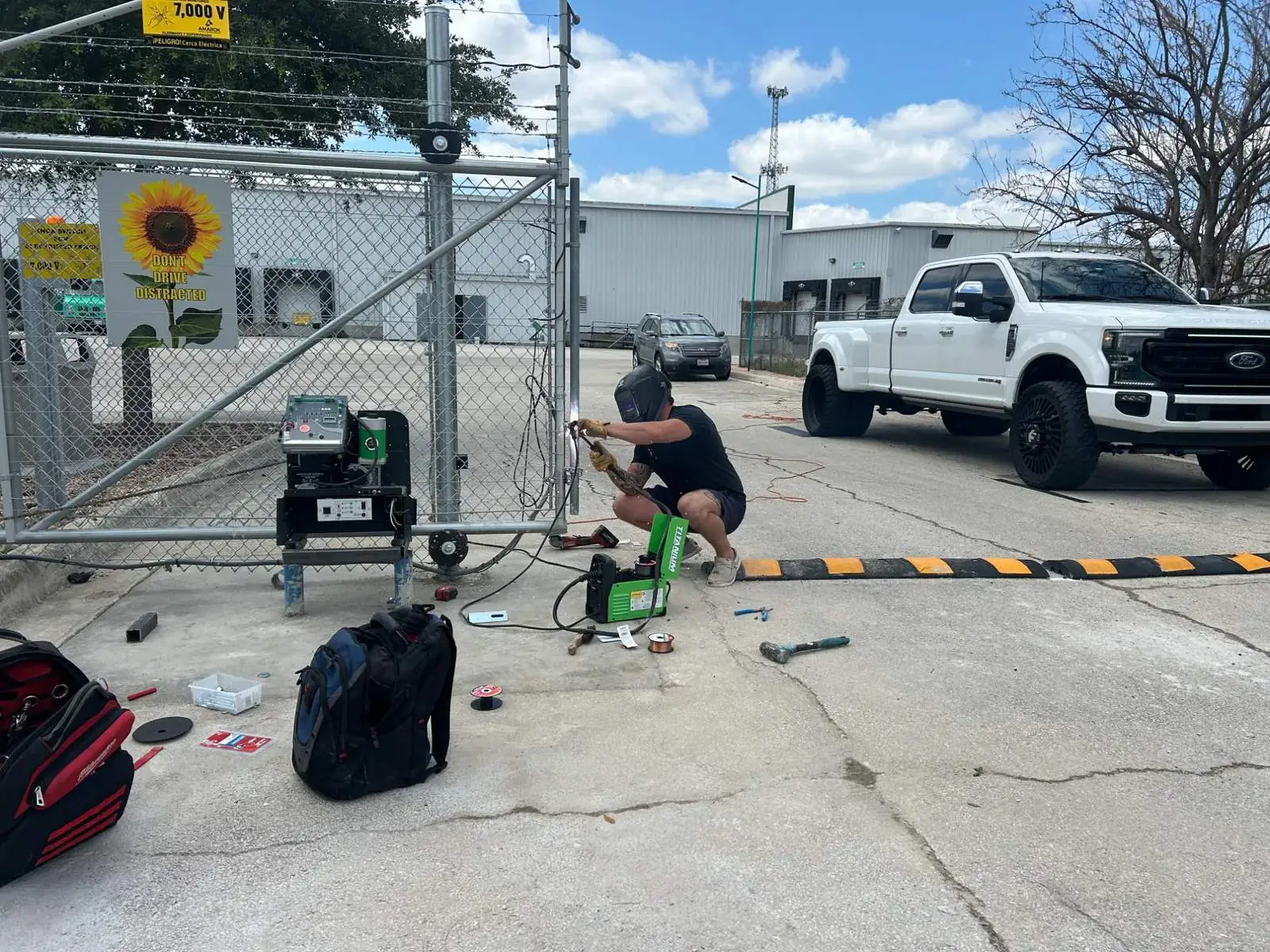
Grinding from a sliding gate almost always comes from one of three places: debris or damage in the track, worn or seized rollers, or a misaligned drive gear meeting the gear rack. Where the sound occurs in the gate travel, and whether it changes with direction, is usually enough to narrow it down before anyone opens a toolbox.
Read the Sound First
Before touching anything, watch the gate through a full cycle and note three things. It takes two minutes and saves real diagnostic time.
Where in the travel does it happen? A noise at one specific point suggests a localized problem — a damaged section of gear rack, debris in the track, a bad spot on a single roller. A noise throughout the entire travel suggests something continuous: a seized roller, chronic drive gear misalignment, or a failing gearbox.
Does it change with direction? Some faults are louder in one direction than the other, particularly gear rack engagement problems and rollers that have developed flat spots.
Has it worsened gradually or appeared suddenly? Gradual worsening points to wear. Sudden onset points to damage, debris, or something coming loose.
Track Debris and Damage
The V-track or channel a sliding gate runs on sits at ground level, which means it collects everything.
Common offenders in this area: gravel and road base tracked in by vehicles, oak leaves and pine needles packed into the channel, mud after heavy rain, mulch from adjacent landscaping, and acorns. Fire ant mounds built directly in the track are a regular find on service calls.
Track damage is a separate category. Vehicles driving over the track — especially heavy trucks and trailers — flatten, spread, or bend the rail over time. Ground settling and soil movement, which the expansive clay soils across Montgomery and Harris counties are notorious for, can pull sections of track out of level or open gaps at joints.
A track that has been flattened or spread produces grinding as rollers ride on the wrong surface, and it accelerates roller wear at the same time.
Roller Problems
Rollers carry the entire weight of the gate. They are a wear item, and in an outdoor environment with dust, moisture, and heat they wear faster than the same part would indoors.
- Seized bearings. A roller that no longer spins freely skids along the track instead of rolling, producing a harsh continuous grind and leaving visible wear marks.
- Flat spots. A roller that sat under load in one position for a long time, or that seized and then freed up, develops flats. The noise is rhythmic and repeats at a regular interval as the gate moves.
- Worn or missing bearing seals. Once the seal is gone, dust and water reach the bearing and destroy it quickly.
- Cracked roller bodies. Nylon and polyurethane rollers degrade under UV exposure and eventually split.
- Rust bonding. Steel rollers left through humid Gulf Coast seasons can rust directly to their shafts.
A quick test: with the gate powered down and the operator manually released, roll the gate by hand and listen. Rollers that grind under manual movement are mechanical, which rules out the entire electrical side of the diagnosis immediately.
Gear Rack and Drive Gear
Most sliding gate operators drive the gate through a toothed gear rack bolted along the gate frame, meeting a pinion gear on the operator. That engagement has to be right.
Too tight and the rack loads the gearbox, producing heavy grinding and drawing excess current. Too loose and the teeth skip and clatter, chewing both the rack and the pinion.
Common causes of bad engagement:
- Gear rack mounting bolts loosening over time from vibration
- The gate sagging on its rollers, dropping the rack relative to the pinion
- The operator pad shifting or settling
- A section of rack damaged by impact
- Missing or worn pinion teeth on the operator itself
Correct engagement leaves a small clearance between the top of the pinion teeth and the base of the rack teeth. The gate should be carried by the rollers, not the gear rack. If the rack is bearing the gate weight, the operator gearbox is being destroyed slowly.
Gearbox and Motor
If the track is clean, the rollers spin freely by hand, and the rack engagement looks right, the noise is coming from inside the operator.
Internal gearbox wear, low or contaminated gear oil, worn motor bearings, and failed chain or belt drives in some designs all produce grinding that seems to come from the gate but originates at the operator housing. This is the point where diagnosis stops being visual, and where continuing to run the gate does real damage.
Why You Should Not Just Keep Running It
A gate that is grinding is progressively damaging something — and usually that something is a smaller, simpler component than the one it will take out next.
A seized roller ruins the track it skids on. A misaligned rack destroys the pinion, then the gearbox. A failing gearbox eventually takes the motor. The gap between replacing a roller and replacing an entire operator is often just a few months of continuing to run a gate that has been telling you something is wrong.
There is a safety dimension too. Sliding gates are heavy, and a gate that comes off its track or out of its guide rollers can fall. That is a genuine hazard, particularly on properties with children.
What Is Safe to Check Yourself
Clearing debris from the track, sweeping leaves and gravel out of the channel, removing an obvious obstruction, and washing mud out of the rail are all reasonable homeowner tasks with the gate powered off.
Beyond that — adjusting rack engagement, replacing rollers, servicing a gearbox, realigning track — involves a heavy gate under tension and an operator that stores electrical charge. That is work for someone with the right equipment. If the noise has been accompanied by a motor that hums without moving, the mechanical problem has likely already reached the drive train.
We service sliding gates across the north corridor, including Conroe, Magnolia, Montgomery, and Willis.
This one gets worse the longer it runs
We call back within 30 minutes. Same-day service available across Houston, The Woodlands, Conroe, Spring, and surrounding areas.