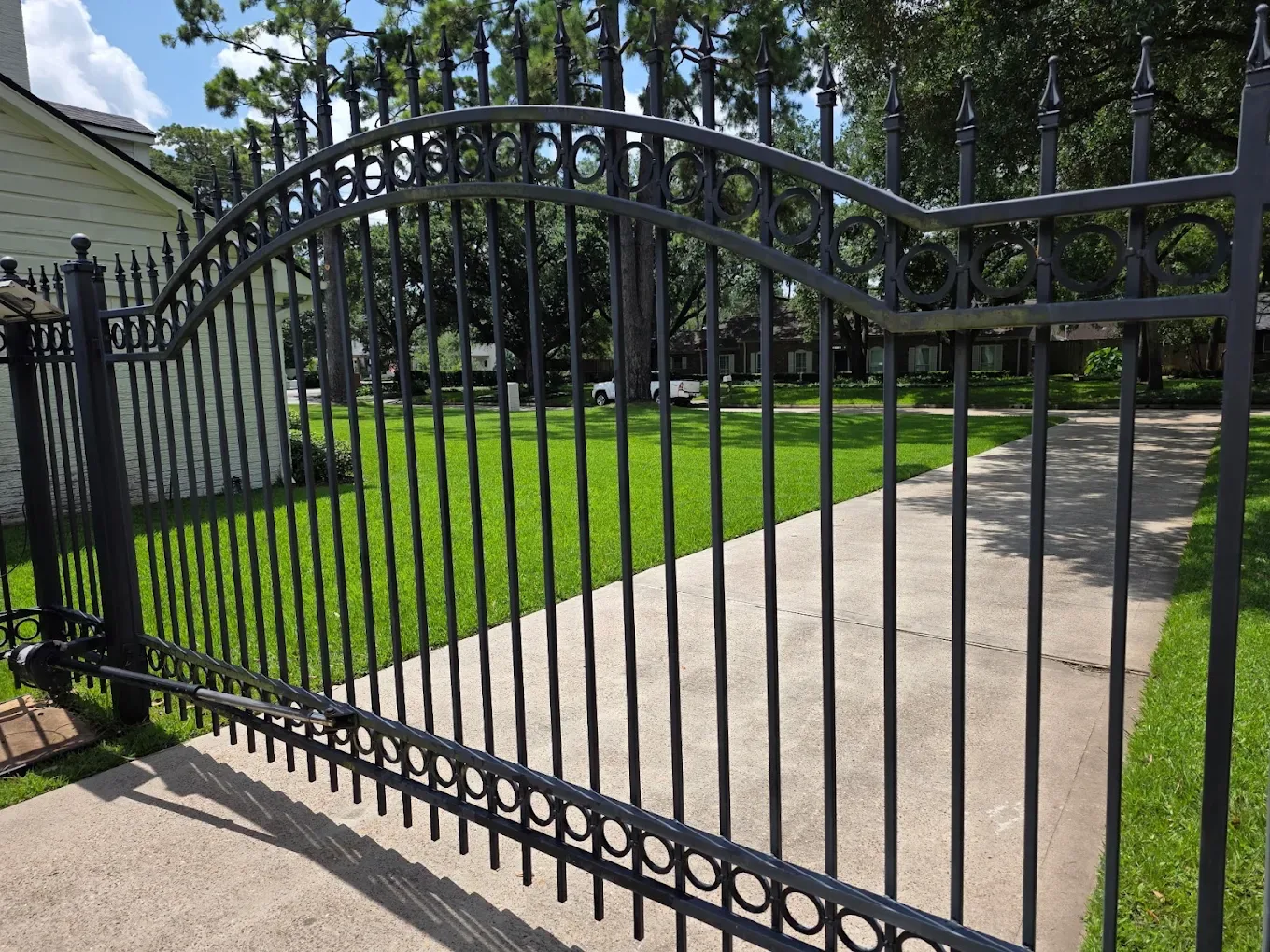
You know the symptoms. The latch side of the gate is lower than the hinge side. The bottom rail scrapes the driveway. You have to lift the gate to get it to latch, and if it is automatic, the operator has started reversing because the gate is dragging. A sagging gate is not going to fix itself, and every week it hangs crooked it is putting extra stress on the one hinge still doing the work. The good news: it is one of the more predictable repairs there is.
Step 1: Find Out What Is Actually Sagging
“Sagging gate” describes a symptom, not a cause. Three different things produce the same crooked gate, and they have very different fixes. You need a level and about five minutes.
Check the post first
Put a 4-foot level on the hinge post, front and side. If the post is out of plumb — especially leaning toward the driveway or toward the latch post — the gate is not sagging, the post is. The hinges may be perfectly fine. In Houston this is extremely common because our expansive clay soil pushes shallow footings around every wet-dry cycle. A post problem needs a post fix; new hinges on a leaning post will sag again within a season.
Then check the hinges
If the post is plumb, grab the latch end of the gate and lift. If the gate moves up a quarter inch or more before the hinges take the load, the hinge pins or bushings are worn. Look at the hinges themselves: rust weeping from the barrel, a visible gap between the two halves, or a pin that has visibly ground down all point to worn hinges. On weld-on hinges, also check the welds for hairline cracks where the hinge meets the post or the gate frame.
Finally check the frame
Sight down the top rail from the hinge end. If the rail itself curves downward, or the gate has racked into a parallelogram with the corners no longer square, the frame has bent. This happens on gates that were built too light for their width, on gates that have been hit by a vehicle, or on gates where a diagonal brace was never installed. Frame problems are fabrication work.
Step 2: What You Can Safely Do Yourself
If the gate is sagging slightly and the hinges are the adjustable type — you will see a nut on the hinge barrel or an adjustment bolt — you can sometimes take up the slack. Support the gate leaf on blocks so it is level, loosen the adjustment, raise the latch side until the gate hangs true, then re-tighten. This buys time. It does not replace worn pins, and if the sag came from wear, it will return.
You can also tighten any bolt-on hinge hardware, lubricate hinge pins, and clear whatever the gate is dragging on. That is where DIY should stop. Iron gate leaves weigh 150 to 400 pounds. Taking one off its hinges without a second person and proper support is how people end up in the emergency room, and a dropped leaf can bend beyond repair.
Step 3: What a Proper Hinge Replacement Involves
When the pins are worn, the fix is new hinges, not adjustment. Here is what the job looks like when we do it:
- Support and remove the leaf. The gate is blocked level and, on automatic gates, disconnected from the operator arm before anything is cut.
- Cut off the old hinges. Weld-on hinges are ground off the post and the frame. The surfaces are cleaned to bare metal.
- Size the new hinges to the gate. This is where rushed repairs go wrong. A 14-foot ornamental iron leaf needs heavy-duty ball-bearing or grease-fitted hinges rated for its weight, not the same hinges that came on it if those were undersized to begin with. Bearing hinges last several times longer in Houston humidity than plain pin hinges.
- Hang the gate true. The leaf is set level, with the right gap at the latch post and the right ground clearance for your driveway slope, then the new hinges are welded in place.
- Reset the latch and the operator. With the gate at its correct height, the latch or strike is repositioned, and on automatic gates the operator limits and force are recalibrated — otherwise the operator keeps driving to the old close point.
- Coat the welds. Fresh welds are bare steel. They get primed and painted to match, or rust starts immediately in our climate.
Most hinge replacements are a half-day job. If the post also has to be re-set or replaced, plan on a full day, because the new footing needs to cure before the gate can be hung.
Why Gates Sag Faster in Houston
Three local factors: humidity rusts hinge pins and bushings faster than in a dry climate; clay soil moves posts; and heavy ornamental iron — the dominant style here because it outlasts wood in our weather — puts more load on every hinge. A gate that would go 15 years in Arizona before its first hinge job might need attention at 7 or 8 here. Annual lubrication and the spring and fall items in our maintenance checklist stretch that considerably.
Do Not Wait on This One
A sagging gate is a small repair that becomes a large one if it is ignored. Once one hinge fails the other carries the entire load and fails soon after. The dragging bottom rail wears through its coating and starts to rust. The operator strains against the extra resistance and, eventually, burns out a motor or strips a gear. We regularly see a simple hinge job that became a hinge, post, and operator job because it waited a year. If your gate is dragging, it is worth a call now.
Hinges, post, or frame — we will tell you which
Written estimate before any work starts. In-house fabrication for matching hinges and repairs. Same-day service across Houston, The Woodlands, Katy, Spring, and surrounding areas.