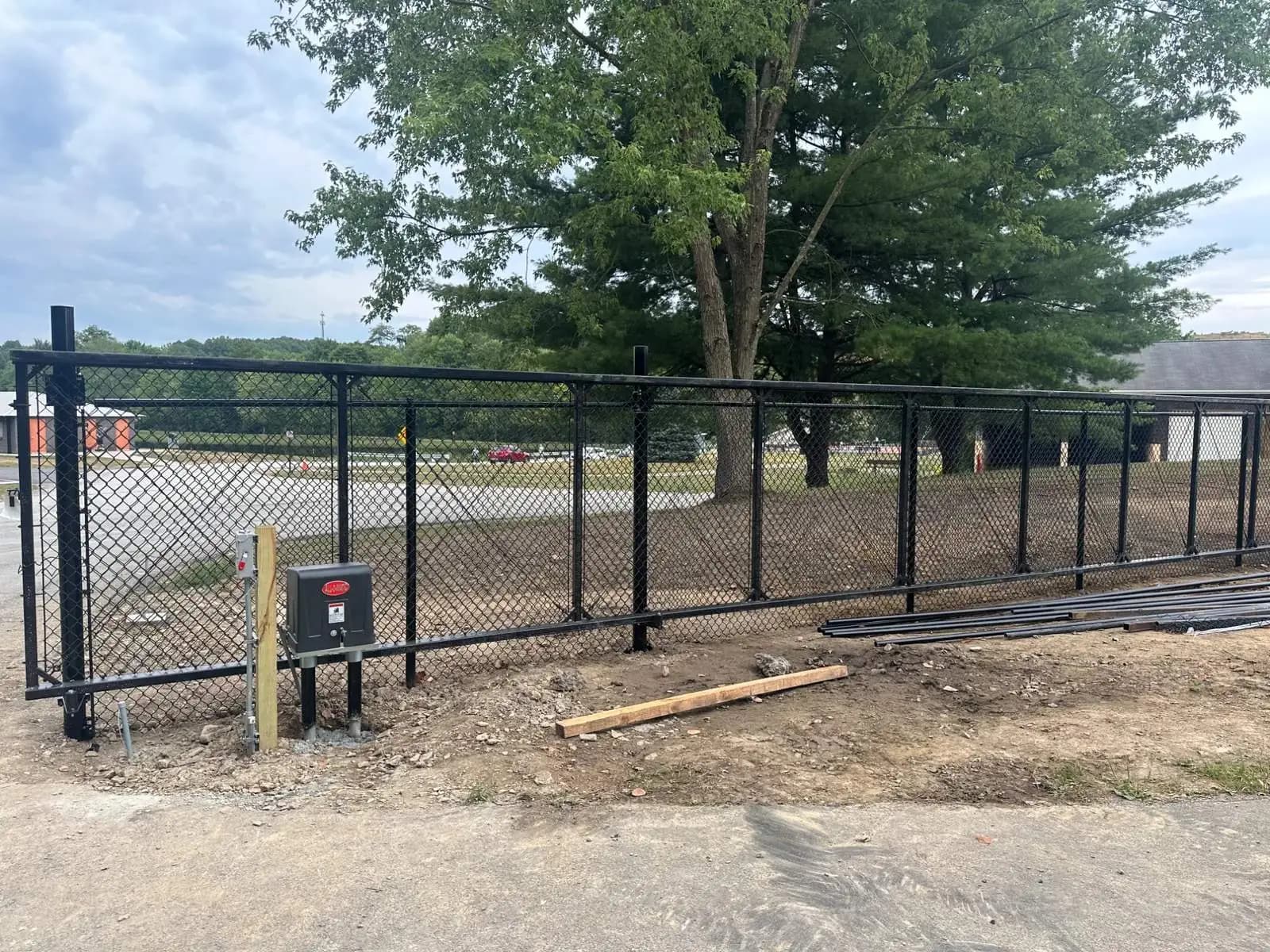
When a gate begins closing and then reverses, the operator has detected what it believes is an obstruction. That detection comes from one of three systems: a photo eye beam being broken, a safety edge being compressed, or the operator own current sensing registering more resistance than expected. Identifying which one is reporting is the entire diagnosis.
Reversal Is Not the Same as Refusing to Close
Two symptoms get described interchangeably, and separating them matters.
A gate that will not start closing at all is being blocked before the cycle begins — typically a safety device that is continuously triggered or has failed outright. We cover that case in our guide to gates that open but will not close.
A gate that starts closing and then reverses got a clean start, then encountered something partway through. Different cause list, because whatever is triggering only becomes active during travel.
If yours reverses consistently at the same point in the arc or slide, note that. It is the strongest clue available.
Current Sensing: The Most Misdiagnosed Cause
Modern gate operators monitor how hard the motor is working. If current draw exceeds a set threshold, the operator concludes it has hit something and reverses.
This is required safety behavior, and it is also the most commonly misdiagnosed cause of unexplained reversal — because there is often no visible obstruction at all. The gate is simply harder to move than the operator expects.
- Dragging hardware. A sagging swing gate whose bottom edge catches on the driveway at one point in the arc. Extremely common, and it produces reversal at exactly the same spot every time.
- Worn or seized rollers on a slide gate adding drag.
- Debris in the track or arc path — gravel, a fallen branch, packed leaves, a stone.
- Failing hinges. Dry, rusted, or worn hinge bushings dramatically increase swing effort.
- Wind loading. Solid-panel and heavily ornamented gates catch a lot of wind. A gust in the wrong direction during closing spikes current draw enough to trigger reversal.
- Thermal binding. Metal gates expand in heat. A gate with tight clearances can bind at 100°F that swings freely at 60°F — which is exactly why some gates only misbehave on summer afternoons here.
- Ground movement. The expansive clay soils across Montgomery and Harris counties shift seasonally, moving posts and changing gate geometry between wet and dry periods.
Important: obstruction sensitivity is adjustable on most operators, and turning it down to stop nuisance reversals is a bad idea. That setting is the difference between a gate that stops when it contacts a child and one that does not. If the gate is reversing because it is genuinely hard to move, the fix is the mechanical problem, not the threshold.
Photo Eye Interruptions During Travel
Photo eyes reverse a closing gate the instant the beam breaks. Intermittent breaks during travel come from:
- Marginal alignment. A beam only just reaching the receiver can drop out from normal gate vibration during travel.
- The gate passing through its own beam. If a photo eye is positioned so the gate leaf or a decorative element crosses the beam path, it triggers every cycle at the same point. This shows up after gates are replaced or photo eyes are relocated.
- Vegetation. A branch or tall grass moving in the wind, intermittently crossing the beam.
- Insects. A moth or wasp crossing at the wrong moment produces genuinely random reversals that never reproduce on demand.
- Sun angle. Low sun striking the receiver saturates it. If reversals cluster around sunrise or sunset, check this first.
Safety Edge Contact
If the gate has a safety edge, any compression of that strip reverses the gate immediately.
Intermittent edge triggering usually comes from a partially damaged edge — a cracked section that makes contact only when the gate flexes during travel — or from water inside the strip creating a short that comes and goes with humidity. An edge that has hardened with age can also self-trigger from vibration alone.
Loop Detector Interference
On gates with vehicle loops, a safety loop that falsely detects will reverse a closing gate. False detections come from loops drifting out of calibration, water intrusion in cracked sealant, nearby electrical noise, and cut or degraded loop wire. A loop that intermittently reports a vehicle produces reversals that seem completely random.
How to Narrow It Down Yourself
A few observations get you most of the way there:
- Does it reverse at the same point every time? Consistent position points to something physical — dragging, a track defect, or the gate crossing its own beam.
- Is it random? Random reversals point to intermittent electrical faults, insects, or loop issues.
- Is it time-of-day dependent? Sun angle or thermal expansion.
- Is it weather dependent? Wind loading or water intrusion.
- Does the gate move freely by hand? With power off and the operator released, move the gate manually through its full travel. Binding, dragging, or a rough spot means you have found a mechanical cause and can skip the electrical investigation entirely.
That last test is the single most useful one, and it is safe to do.
Two Shortcuts That Make Things Worse
Do not increase the force setting to overpower the reversal. That is disabling a safety system to work around a mechanical fault, and it means the gate will keep pushing on whatever it contacts next.
Do not disconnect the photo eyes or edge. Same reasoning, and it puts a commercial or HOA installation out of UL 325 compliance.
We diagnose reversal faults across the north corridor, including Spring, The Woodlands, Conroe, and Montgomery.
Let us find what it is actually detecting
We call back within 30 minutes. Same-day service available across Houston, The Woodlands, Conroe, Spring, and surrounding areas.