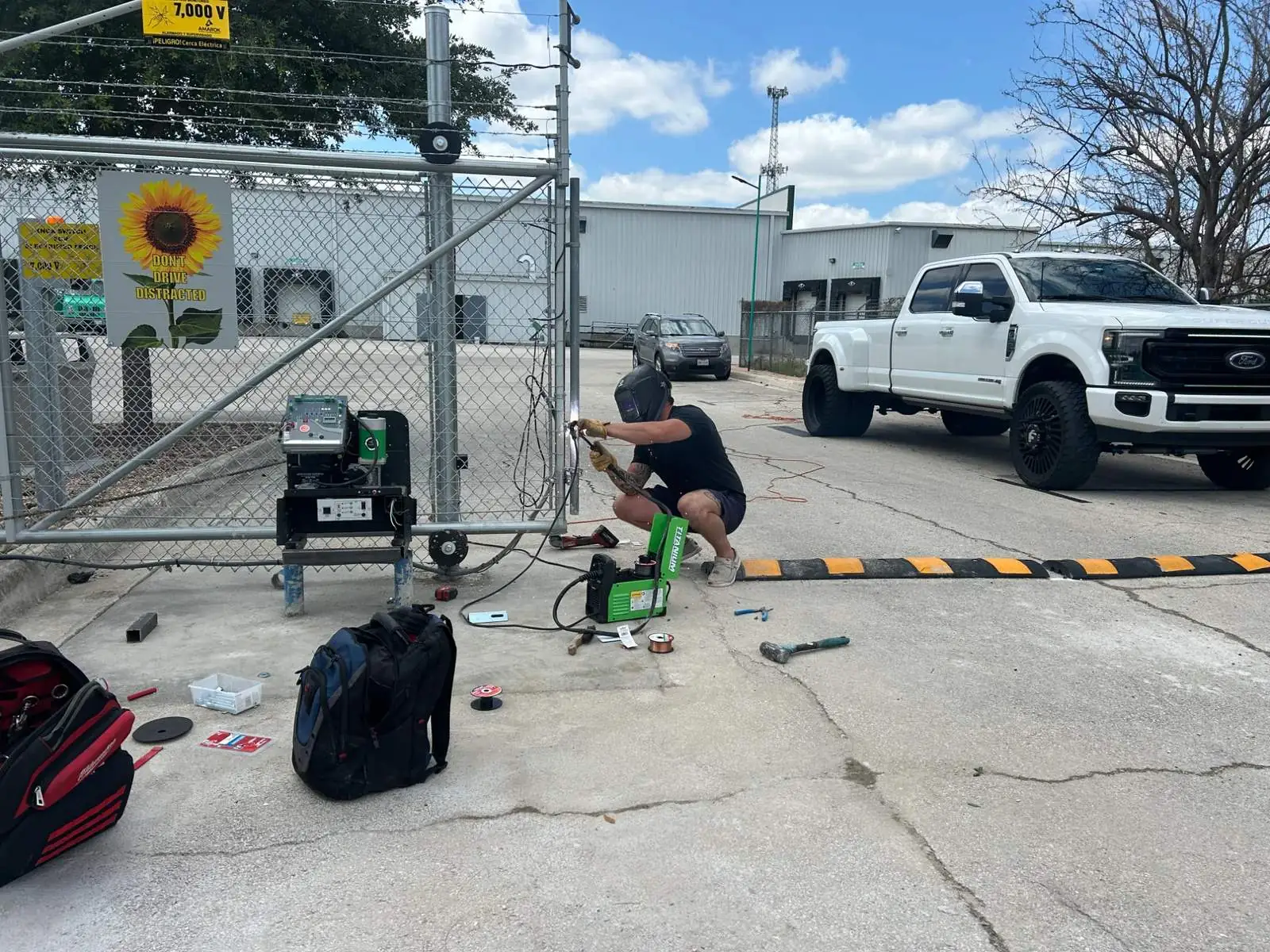
An automatic gate can weigh 600 pounds and moves under power that does not stop because something soft is in the way. Children have been killed by gates. That is why UL 325 and ASTM F2200 exist, and why the difference between a compliant install and a cheap one is not cosmetic — it is the difference between a gate that reverses and one that keeps pushing.
What UL 325 Actually Is
UL 325 is the safety standard covering gate operators, and ASTM F2200 covers the gate construction itself. Together they define how an automated gate must be built and equipped to prevent entrapment. Operator manufacturers build to UL 325 — that part is handled at the factory. Compliance lives or dies at installation, because the standard governs what the installer must add, set, and verify on site.
These are not optional best practices. They are the recognized standard of care, and in an injury claim, an install that ignores them is indefensible.
Primary and Secondary Entrapment Protection
The core requirement: an automated gate needs two independent means of entrapment protection in each direction of travel.
Primary protection is usually the operator's internal force sensing — when the gate meets resistance, it stops and reverses. This only works if the force setting is correctly calibrated. Set too high to stop a gate from nuisance-reversing on a windy day, and it will also fail to reverse on a person. This adjustment is the single most commonly abused setting in the industry.
Secondary protection is an external device that detects an obstruction before contact — photo eyes across the opening, or contact edges on the gate itself. A gate with only one form of protection is not compliant, regardless of how well that one form works.
What Else the Standard Requires
- Warning signage on both sides of the gate — the standard specifies this and it is one of the first things missing on cut-rate installs
- Controls positioned out of reach of the moving gate, so nobody operates it while standing in the path
- No pinch or entrapment points in the gate construction — pickets spaced so a child cannot reach through into the mechanism, and screening on slide gate openings within reach
- Guarding on exposed rollers and moving hardware
- Pedestrian traffic separated from vehicle gates — a pedestrian gate rather than people walking through the vehicle opening
That last one gets overlooked constantly on residential installs. A vehicle gate is designed and sensed for vehicles. People — especially children on bikes — behave nothing like cars, and the sensing does not account for them the same way.
Why Cheap Installs Skip All of This
Every item above costs money and time. Photo eyes are hardware plus wiring plus alignment. Contact edges are more hardware. Proper force calibration takes patient testing rather than turning the dial until the gate stops complaining. Signage costs a few dollars and an installer's attention. Screening a slide gate takes fabrication.
An installer competing purely on price sheds exactly these items, because the customer comparing two quotes almost never asks about them. The gate opens and closes either way on day one. The difference only surfaces on the worst day.
How to Check Your Own Gate
Three checks you can do this afternoon:
- Look for photo eyes — small sensor units on both sides near the bottom of the opening, facing each other. No photo eyes and no contact edges means no secondary protection.
- Test the reversal. With the gate closing, block the photo eye beam with an object (not your hand or foot). The gate should stop and reverse immediately. If it keeps going, your secondary protection is not functioning.
- Look for warning signage on both sides of the gate.
Do not test force sensing by putting any part of your body in the path. Use a sturdy object such as a cardboard box or a length of wood.
The Liability Nobody Explains at Sale Time
If someone is injured by your gate and the install did not meet the recognized standard, the exposure lands on the property owner. Commercial properties, HOAs, and rental owners carry this weight most heavily — a gate at an apartment complex or storage facility serves the public, and a non-compliant installation there is a serious problem waiting for a bad afternoon.
Our $89 service call includes a full safety inspection: entrapment protection in both directions, force setting verification, photo eye alignment and function, signage, and construction hazards. If your gate was installed by someone else and you have never had it checked, that is the cheapest peace of mind available on this list.
$89 safety inspection — entrapment, force settings, sensors
We call back within 30 minutes. Same-day service available across Houston, The Woodlands, Katy, Spring, and surrounding areas.