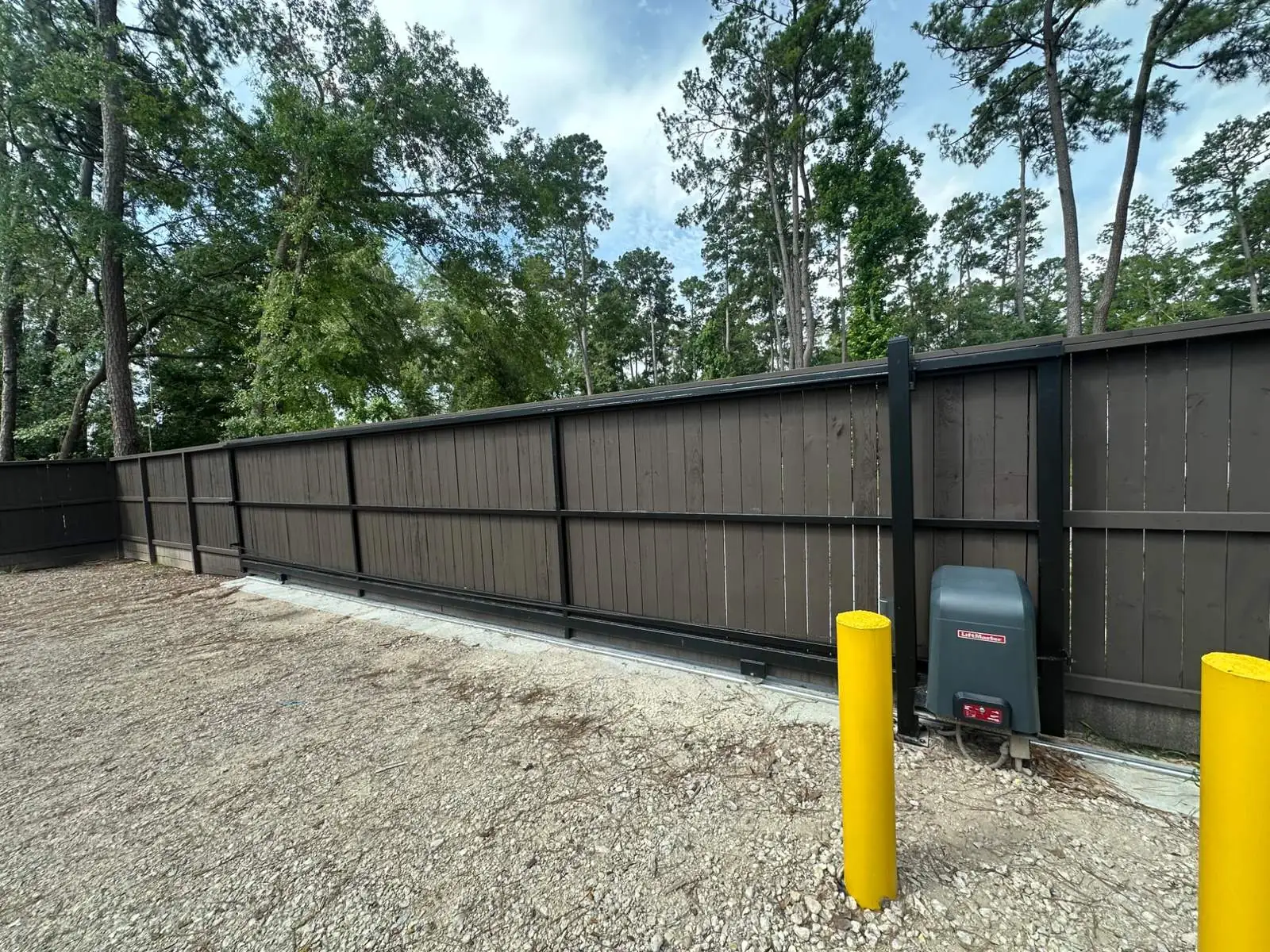
Houston is not built for hard freezes and neither are most of the gates here. Uri proved that in 2021, and we have seen a version of it every winter since. Cold causes a short list of specific failures, and knowing them means a freeze costs you nothing instead of a new operator.
What Cold Actually Does to a Gate
Battery capacity collapses
This is the number one freeze failure and it surprises people every time. A lead-acid backup battery loses a substantial share of its usable capacity as temperatures drop toward freezing. A battery that runs your gate fine in October can be effectively dead at 22 degrees — and hard freezes in Houston almost always come with grid strain, which is exactly when you need the backup. If your battery is more than three years old going into winter, replace it before the first freeze warning, not after.
Moisture gets in, then expands
Houston freezes are wet freezes. Rain or sleet enters an operator enclosure through a worn gasket or an unsealed conduit penetration, then freezes and expands. That expansion cracks housings and shorts boards. Water intrusion during a freeze is how a functioning operator becomes a replacement.
Metal contracts and tolerances shift
Steel shrinks slightly in extreme cold. On a gate that already sits close on its tolerances — a leaf with minimal ground clearance, a slide gate with a tight roller fit — that shift is enough to cause binding. The operator senses resistance and either reverses repeatedly or strains against it.
Tracks and hinges seize
Standing water in a slide gate track freezes solid and the gate cannot move. Grease in hinges and roller bearings thickens in cold and adds drag. Neither is dramatic on its own; together they make the operator work noticeably harder.
Before the Freeze — A Short Checklist
- Check the battery age. Past three years, replace it. This is the highest-value item on the list and the cheapest.
- Inspect the operator enclosure. Gasket intact, lid seated, conduit penetrations sealed. A tube of sealant beats a new control board.
- Clear the slide track. Debris holds water; water becomes ice. Sweep it out.
- Confirm drainage at the gate line. Anywhere water pools is where ice forms.
- Practice the manual release. Same advice as hurricane prep and for the same reason — you do not want to learn it in the dark at 20 degrees.
During the Freeze — The Mistake That Breaks Gates
Do not keep pressing the button on a gate that will not move. This is where most freeze damage actually happens. If the gate is frozen to the ground, iced into its track, or binding from contracted metal, the operator does not know that — it just applies force. Repeated attempts strip drive gears, burn motors, and bend hardware. The freeze did not break your gate; the fourth button press did.
If the gate will not move: stop, use the manual release, and check whether it moves by hand. If it fights you, something is physically frozen. Leave it until it thaws, and use the manual release to move it if you need through.
Do not pour hot water on a frozen gate or track. Rapid temperature change on cold steel causes its own problems, and the water refreezes immediately in a colder, harder layer.
After the Freeze — Restart Sequence
Before running the gate under power, walk it: look for ice remaining in the track, standing water around the operator base, and any visible damage to hardware. Open the operator enclosure and check for moisture inside — if it took water, leave the power off and call us. Energizing a wet board is what turns a dry-out into a replacement.
If everything is clear and dry, re-engage the manual release and run one full cycle while watching and listening. Grinding, hesitation, or a stop mid-travel means something shifted and the gate needs attention before you keep cycling it.
The Delayed Failure Nobody Connects
Here is the pattern we see every February: a gate works fine through the freeze, then starts acting up two or three weeks later. What happened is that the operator strained during the cold snap — fighting a frozen track or a binding leaf — and the wear showed up later as a weak capacitor or worn gears. If your gate got forced during a freeze, even if it survived, it is worth a look. Catching a strained component before it fails entirely is the whole game.
Freeze-Ready Upgrades Worth Considering
- Fresh battery backup sized with margin, so reduced cold capacity still covers your cycles
- Sealed, gasketed enclosure if yours is aging or was never properly sealed
- Heater kit for commercial installations where gate uptime is non-negotiable during a freeze event
- Proper ground clearance on swing gates, so contracted metal and minor ice do not cause drag
Our $89 service call covers the whole freeze-readiness check — battery test, enclosure seal, track and drainage, clearance, and manual release service. Worth doing in November rather than during the first hard freeze warning of the season.
$89 pre-season check — battery, seals, clearance, manual release
We call back within 30 minutes. Same-day service available across Houston, The Woodlands, Katy, Spring, and surrounding areas.