Houston is one of the hardest climates in the country for an outdoor metal structure. We average high humidity nearly year-round, we get salt air on the south side, and we cycle between soaking rain and 100-degree heat. A material that lasts 25 years in Phoenix can look rough here in eight. Here is what actually survives.
Ornamental Iron — What We Install Most
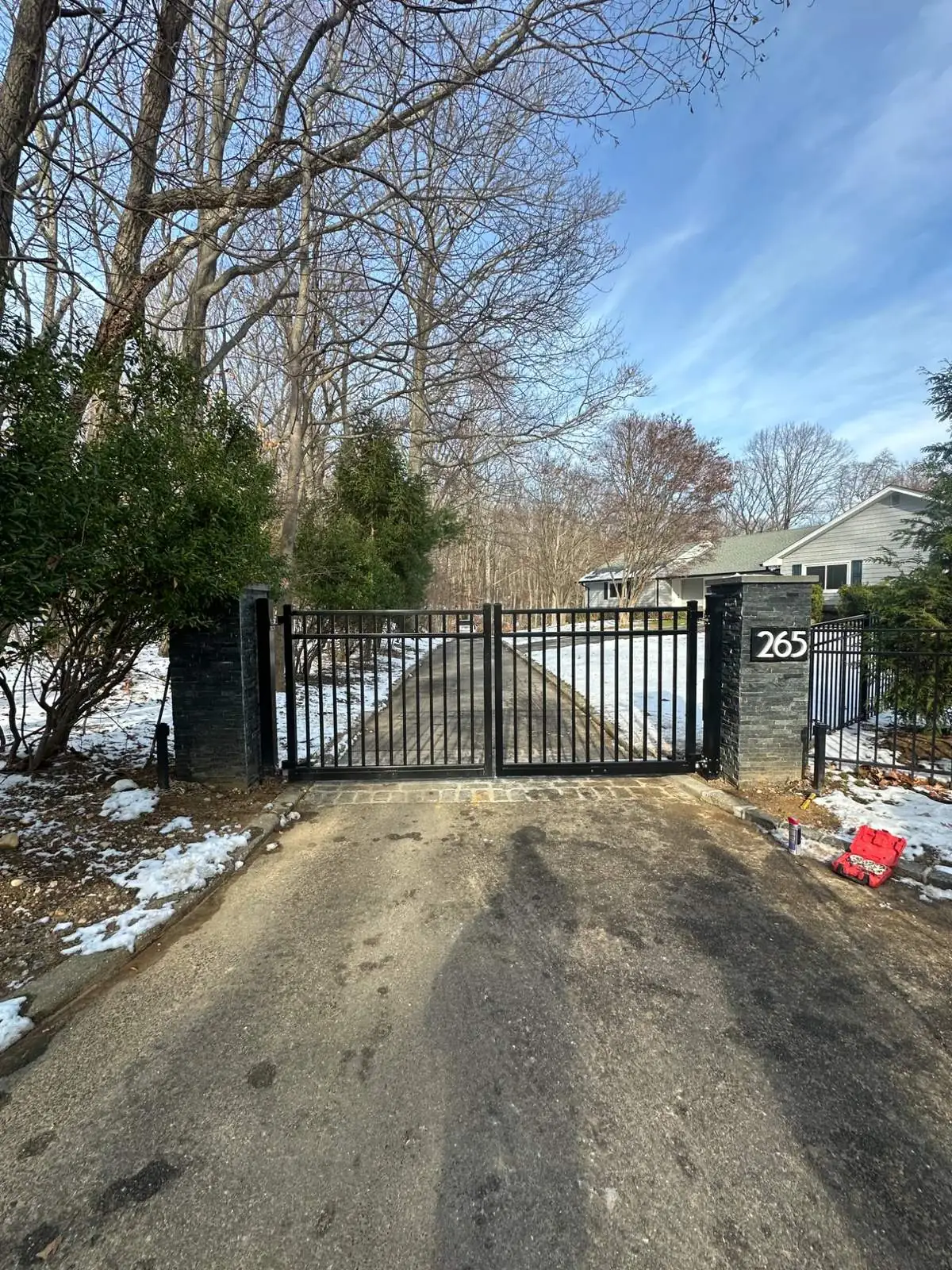
When people say iron gate in Houston they almost always mean fabricated steel with an ornamental profile, and this is the workhorse of the local market for good reason. It is strong enough for wide spans, it takes custom fabrication (arches, scrollwork, matching an existing fence pattern), and it delivers the architectural weight most Houston homes call for.
The catch is finish quality, and this is where installers separate. Bare steel in Houston humidity rusts, full stop. What determines whether your gate looks good in year twelve is the prep and coating: proper surface prep, a quality primer, and a durable topcoat — or better, hot-dip galvanizing before powder coat on premium builds. A gate that was scuffed and rattle-canned will show rust bleed at the welds within a few Gulf Coast summers. Ask any bidder exactly what their finish process is; vague answers tell you what you need to know.
Best for: most Houston properties, estate homes, anything needing custom design or wide spans.
Aluminum — The Low-Maintenance Alternative
Aluminum does not rust. In a humid coastal climate that is a genuinely significant advantage, and it is why aluminum has gained ground in Clear Lake, League City, Seabrook, and the other bay-adjacent communities where salt air accelerates corrosion on everything.
The tradeoffs are real though. Aluminum is softer than steel — it dents where steel would shrug, and a delivery truck backing into an aluminum gate does more damage. It is also weaker per unit of section, so wide spans need heavier extrusions or additional bracing to avoid sag. And while aluminum will not rust, powder coat on aluminum can still chalk and fade under relentless Texas UV.
The upside beyond corrosion: aluminum is meaningfully lighter, which means less load on the operator, less strain on hinges, and often a smaller operator requirement. On a long single leaf, that weight savings matters.
Best for: coastal and bay-area properties, owners who want minimal maintenance, applications where gate weight is a constraint.
Tube Steel — Where the Cheap Quotes Come From
Light-gauge tube steel is what shows up in the lowest bids. It can be perfectly appropriate for a simple ranch or utility gate where appearance is secondary. The problem in Houston is that thin-wall tube rusts from the inside out — moisture enters through uncapped ends, weld pinholes, and fastener penetrations, and corrodes the interior where no coating protects it and no inspection finds it. By the time you see rust bleeding through the outside, the wall section is already compromised.
If you go this route, insist on capped ends and interior coating. Otherwise you are buying a gate with a hidden clock on it.
Best for: utility and agricultural gates where budget dominates and appearance does not.
Wood — Beautiful, and the Most Demanding
Nothing matches the warmth of a real wood gate, and cedar in particular suits a lot of Houston architecture. But wood in this climate is a commitment. Humidity swells it, drought shrinks it, and the cycle works joints loose over time. Untreated wood invites rot at the bottom rail where water sits and insects where moisture lingers. A wood gate needs sealing every two to three years to stay right.
Wood is also heavy, and it gets heavier when it is wet — which means the operator sees a moving target for load. We size operators for saturated weight on wood gates, not dry weight, because a unit sized for a dry gate will strain every time it rains.
The approach we usually recommend instead: a steel frame with wood cladding. You get the wood appearance and the steel structure, the frame holds geometry regardless of what the wood does seasonally, and if boards eventually need replacing you swap cladding rather than rebuilding the gate.
Best for: owners who want the wood look and accept the maintenance — ideally as cladding on a steel frame.
Quick Comparison
- Longest life with proper finish: ornamental iron / fabricated steel
- Best in salt air: aluminum
- Lightest on the operator: aluminum
- Most design flexibility: fabricated steel
- Lowest upfront cost: tube steel (with the caveats above)
- Highest maintenance: solid wood
For the majority of Houston properties we recommend properly finished ornamental iron, and for bay-adjacent addresses we have the aluminum conversation seriously. We fabricate in our own shop, so the material decision is genuinely open rather than steered by what we happen to stock.
We fabricate in-house — let us walk you through the options
We call back within 30 minutes. Same-day service available across Houston, The Woodlands, Katy, Spring, and surrounding areas.